No Accidents in a Livable City
We volunteers with Pasadena Complete Streets Coalition (PasCSC) come together because we care about having a safe, livable city, and because we’re eternally curious about how to make it happen. We often share or recommend articles and books that help us get better educated about the latest experiments, policies and findings relevant to the issues we care about. A couple of us created an occasional newsletter called Our Livable City in order to share some of that useful information more widely. This article was written for that newsletter but I wanted to have it in a more permanent spot.
---------------
Would you move into a tenth-floor apartment with no railing on the balcony? Would you chop vegetables with a knife that didn’t have a handle? If someone fell off the balcony or got cut by that knife, would you blame them, or would you blame the design?
DID YOU KNOW? The configuration of our streets (as well as our factories, our pharmaceuticals, and our hospitals) kills tens of thousands of people in the United States every year. Every three minutes, someone in the U.S. dies in an “accident.” In fact, “accidents” are now the third leading cause of death, and the number one cause for people ages 0-44.
But most of them don’t make the news—not like plane crashes or a big explosion at an industrial facility. Usually these incidents prompt few questions; changes to our systems are rare and can take years, and costly, time-consuming lawsuits, before they happen. Oh, on top of that, those deaths cost individuals and families over $1 trillion.
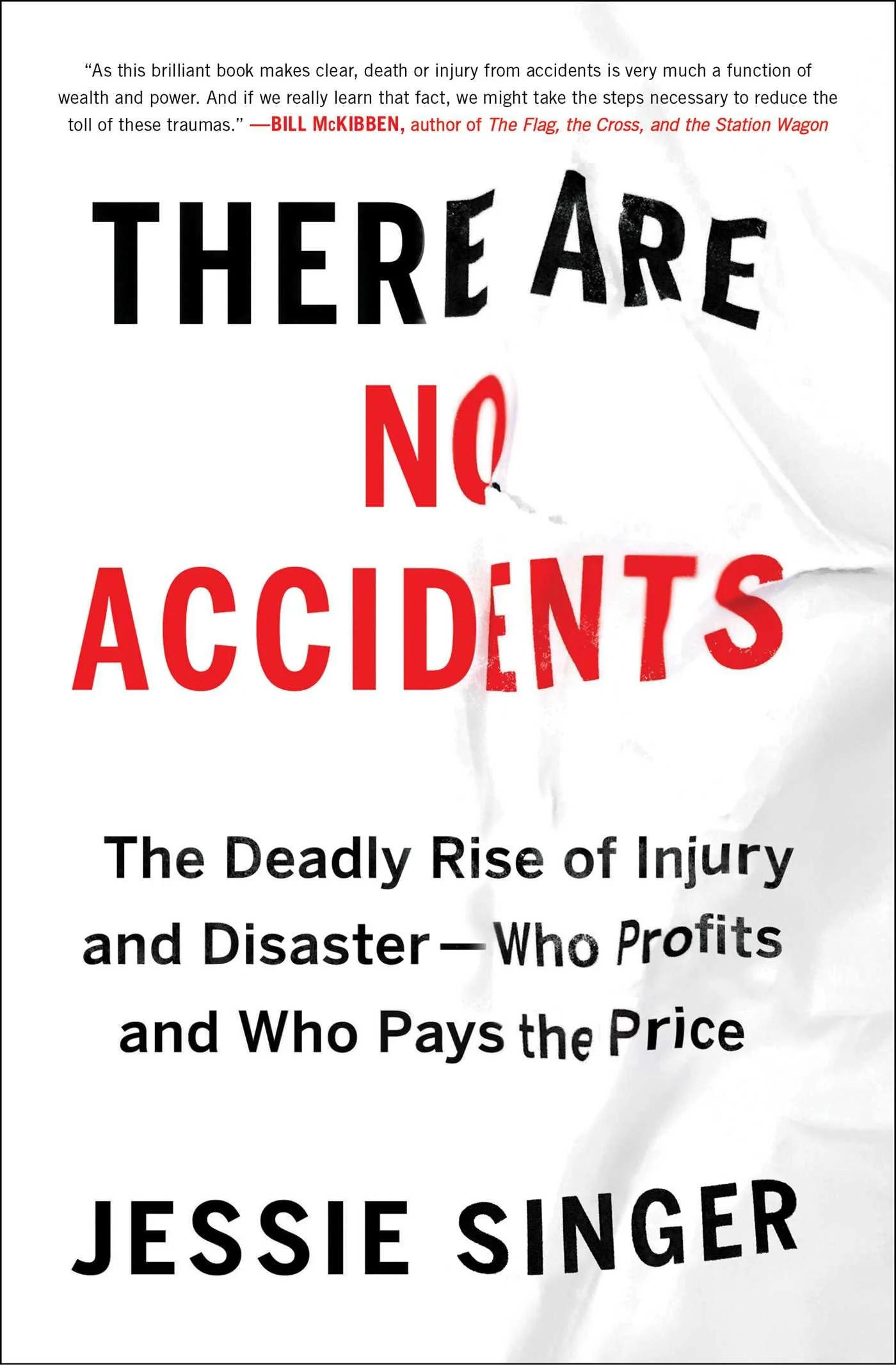
If those numbers are a surprise, and if you wonder how design could be so influential, you’ll find a compelling case in Jessie Singer’s 2022 book There Are No Accidents: The Deadly Rise of Injury and Disaster - Who Profits and Who Pays the Price. She goes into the history of the factory disasters, traffic deaths, overdoses, and hospital errors that are generally referred to as “accidents,” but which are really the result of poor design and deliberate cruelty in the name of profits, expedience, and car culture. (And also racism.)
Want to learn more? Read the book… and:
Hear Jessie Singer interviewed:
The Shift podcast from Automotive News
From Another Angle podcast, sponsored by the Carnegie Council for Ethics in International Affairs
John Simmerman’s Active Towns podcast
What other cities have done:
Alhambra has a serious plan to improve safety for pedestrians and people on bikes
Hoboken, NJ has taken crashes on their streets very seriously
Brooklyn’s Berry Street is now a pedestrian-friendly Bike Boulevard
Paris has been transformed. There’s much less traffic and it’s a pleasure to get around by bike—as attendees of the Paris Olympics discovered.
Read a recent overview of changes in Paris, as Mayor Anne Hidalgo, whose political energy powered much of the transformation, leaves office.
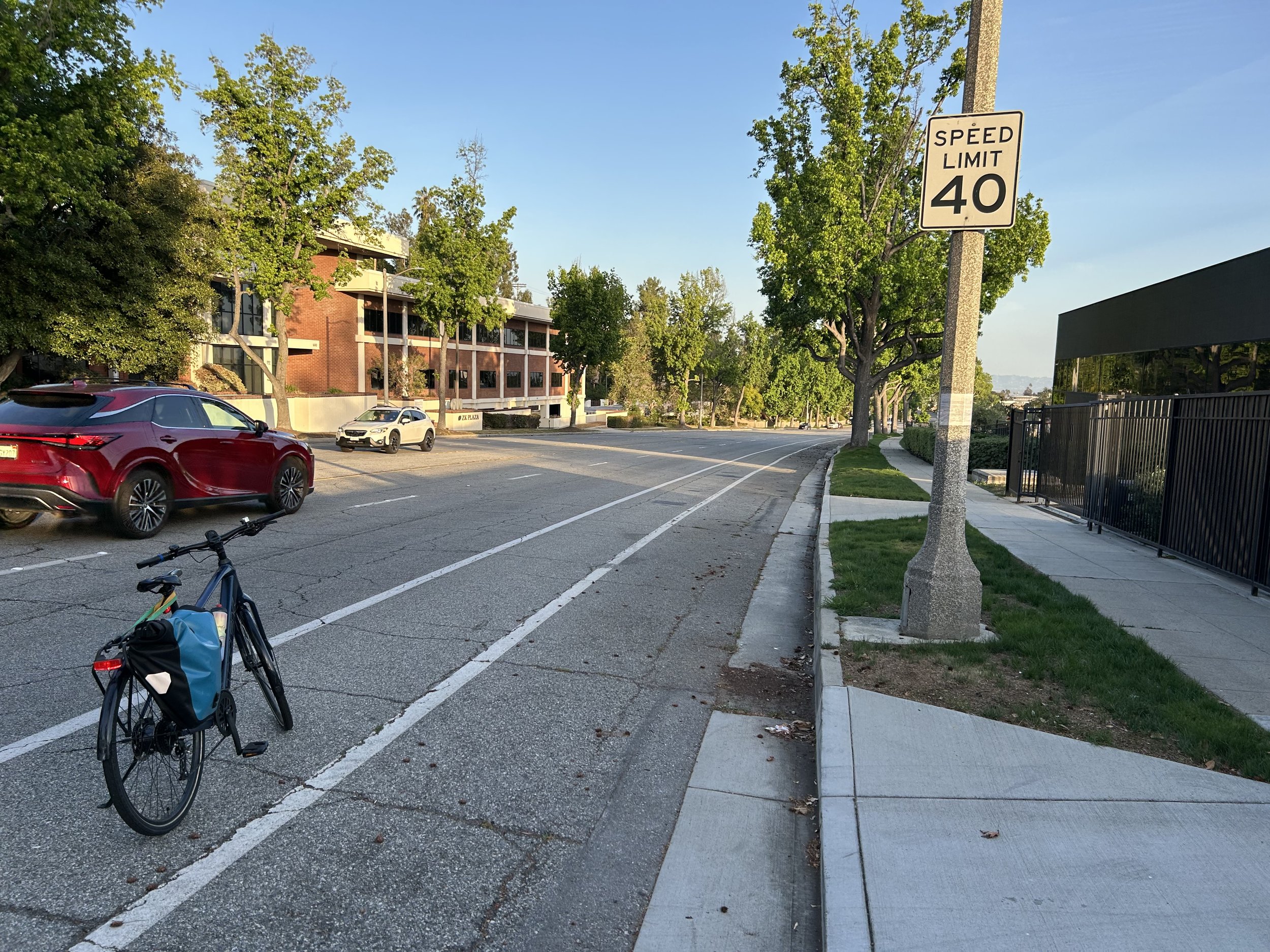
On Rosemead Blvd, a paint-only bike lane puts people on bikes next to cars moving 40 MPH or more. Mixing people walking or biking with high-speed traffic creates a dangerous environment.
What could Pasadena do?
Educate our fellow residents about the importance of street design for safety
Carry out a Crash Analysis Studio for a local auto-involved injury or death
Require the Pasadena Police Department to promptly report injuries and deaths on the city’s streets. How about putting this information on the City’s website?
Invite residents and visitors to report their near misses and close calls to the City Service Center, and collect and report this data.
Use All Ages & Abilities design standards for neighborhood streets throughout the city
Think about what lessons we can take from Paris in advance of Pasadena’s participation in the 2028 Olympics