How much death do we want?
Traffic deaths are a choice. Small changes in street design can reduce or eliminate traffic deaths while increasing driving safety and convenience.
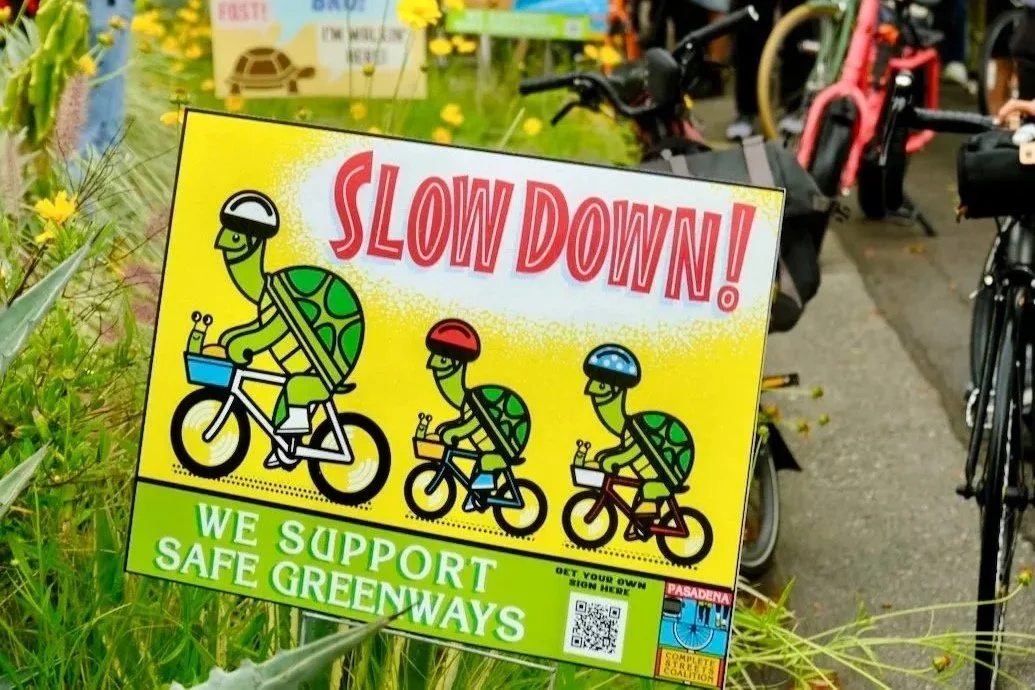
Yard signs in Pasadena show that many residents want slower, safer driving on their street.
Pasadena has a lot of traffic injuries and deaths
Pasadena has a problem with dangerous driving. Each year, collisions in Pasadena cause an average 600 injuries, 40 “serious” injuries, and 5 deaths. Traffic collisions are a leading cause of trauma injuries in the emergency room at Huntington Hospital, accounting for both the second largest category (people in cars getting injured) AND third largest category (people outside cars getting hit) of emergency room visits.
Do you know someone who has been injured or killed in a collision? I have a cousin who had to quit his job after a truck “clipped” him on his bike, causing a brain injury and a life-long disability. A friend from summer camp was killed while jogging when we were 15. My boss at work has been hit twice on the same Pasadena street.
These injuries are so common that they barely even get noticed. Was someone paralyzed this week? Did someone in Pasadena lose a limb or become permanently disabled? Serious injuries occur almost weekly, but vehicle collisions rarely make the news unless someone is killed.
There are also huge financial costs associated with traffic collisions. Medical care is very expensive, and deaths are evaluated at over a million dollars each by insurance groups. Every traffic collision is associated with large financial costs due to property damage, emergency response, and increased insurance rates. Pasadena residents spend millions of dollars each year on the costs of collisions.
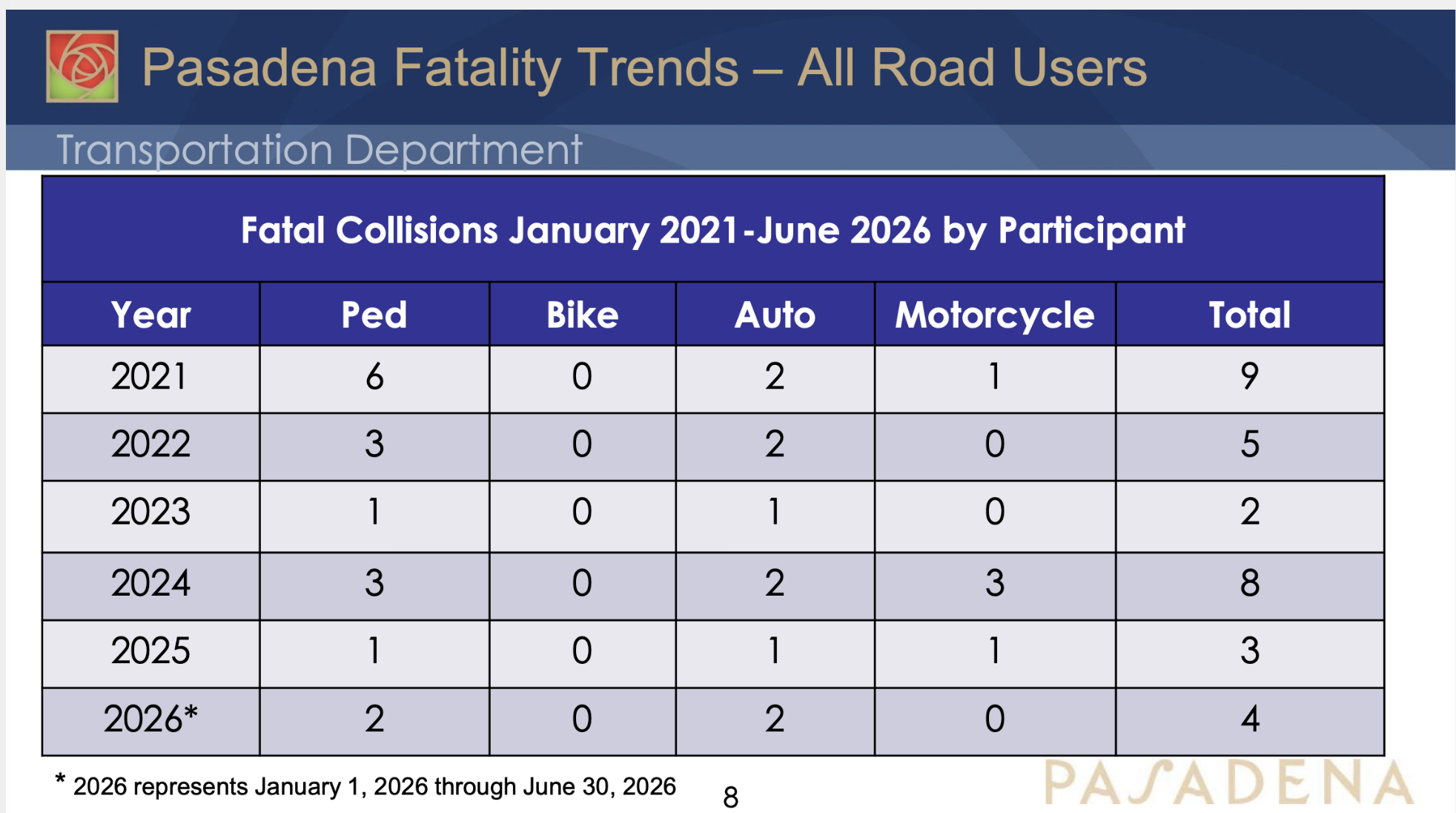
In Pasadena, we kill about 5 people every year so that we can drive faster.
Image adopted from presentation to the Transportation Advisory Commission, Sept 24, 2026
Traffic deaths are a choice
Death by car is common in all of America, as well as in Pasadena. Nationwide, 40,000 people are killed each year by cars, and car-related trips to the emergency room number in the millions. The pedestrian death rate in America is TRIPLE the world-wide average. With so many injuries and deaths, some people have come to see car-deaths as inevitable. But, traffic deaths are clearly preventable. Research and experience in other cities prove that killing people with cars is a choice.
Some cities have already decided to stop killing people with cars. Somerville, Massachusetts and Hoboken, New Jersey both reduced the death rate to zero by making small changes in speed and street design. These cities reduced speed limits, added traffic calming measures and configured intersections for pedestrian safety. How streets are designed makes a big impact on safety. Cities that prioritize safety over speed prove that traffic deaths can be reduced with minor interventions.
Better street design saves lives
Street design determines speeds, and speeds determine safety. Build a street for fast, speeding traffic, and you are certain to get higher rates of death and destruction. Make some changes to reduce speeds, and fewer people are going to die. Every single time.
According to author Jeff Speck in his book Walkable City Rules, “While many different factors influence the safety of humans in cities, none matters nearly so much as the speed at which vehicles are traveling. The relationship between vehicle speed and danger is, to put it mildly, exponential.”
Small changes in speed make a big difference. Reduce typical speeds on a street from 35 MPH to 30, and injuries are reduced by 20%. Dropping speeds instead to 25 MPH would cut injuries in half. In Pasadena, those sorts of changes would prevent hundreds of injuries each year.
Can we really change how fast people drive? Of course. “We drive as fast as road designs tell us to drive,” writes author and traffic engineer Charles Montgomery.
Wide lanes, open spaces, long lines of sight, and roads with multiple lanes are all visual cues that a street is made for driving fast. In contrast, curves, narrow lanes, trees, “edge friction” from parked cars, and other visual clutter encourage slower driving. People rarely notice the posted speed limit, but instead drive at a speed that feels comfortable for a given road. Build the road for speed, and speeding you will get.
But driving slower takes longer - right?!
Well, not really. Most trips in Pasadena are only a few miles. The difference between driving safely instead of dangerously only adds thirty seconds or a minute to a typical trip. Trips across Pasadena take 10-12 minutes at current speeds, or 11-13 minutes at safer speeds. I don’t think anyone will notice an extra minute to get across town, but we’ll definitely notice if fewer people show up in the morgue.
How can we reduce speeding without disrupting daily routines? Some types of changes most people won’t even notice: narrower lanes, curb extensions, and added landscaping all send subtle cues that slow down drivers. Other possible interventions include speed cushions, chicanes, traffic circles, speed cameras, and median islands. Most importantly, all of these things work: designs that reduce speeding also reduce injuries and deaths. While people might prefer different strategies, I think we can all agree that we want less death rather than more.
Some people want more death
Change is hard. In Pasadena, we kill 5 people each year so that we can drive fast. Some people don’t want to see that change, and they organize to oppose safer streets. These groups present misleading information to delay or cancel safety projects, seemingly to protect the status quo of high speed driving. I think that view is misguided and extreme.
I believe if given the choice, most people would spend an extra 30 seconds driving to prevent a crash. Pasadena residents seem to want slower driving in their own neighborhoods. SLOW DOWN is a common message on yard signs, including signs we give away. Imagine if instead anti-safety groups printed yard signs that said DRIVE FASTER! Would you want one? I don’t think anyone wants faster, more dangerous driving in their own neighborhood.
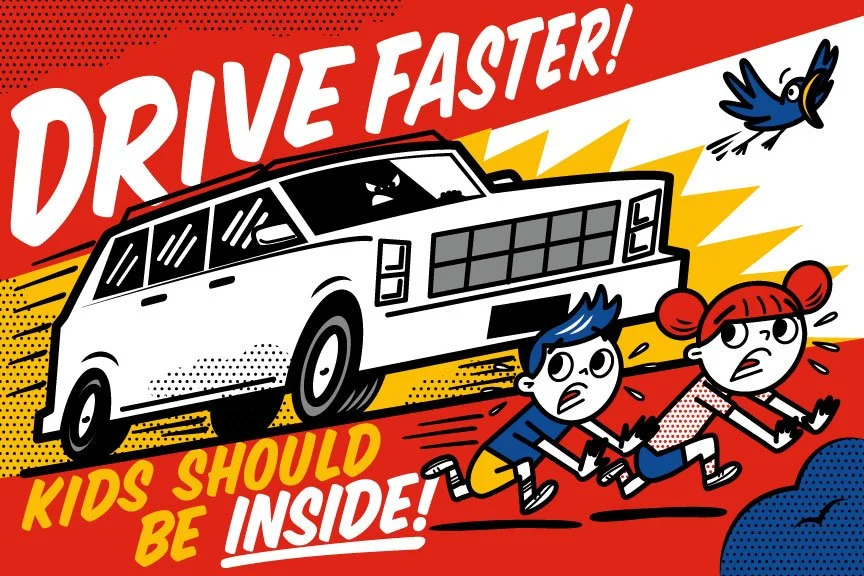
I’ve never seen a yard sign that says “drive faster”. But weirdly, some people argue for street designs that cause faster driving.
Illustration by Dan Sipple
Is Pasadena a Place or a Pass-through?
In his book “Confessions of a recovering traffic engineer”, Charles Marohn writes that traffic speeds in a “Place” should be slow and safe, around 20 MPH, to support human activities like shopping and walking. Places are valuable because they are attractive destinations where people want to spend time. The Fair Oaks/Orange Grove and North Lake Avenue specific plans now describe the importance of a pleasant walking environment for healthy businesses. By contrast, “Roads” between Places should support fast driving, so that we can get to Places quickly.
In my opinion, we should think of Pasadena as a Place where people want to spend time walking, shopping, and enjoying our beautiful city. Pasadena has access to several freeways, which are the fast Roads we use to get to other Places. Is speeding between red lights to save a few seconds really worth risking lives or smashing up a car? I don’t think so. I think driving should feel safe and convenient, not stressful and harried. Better street design would keep driving trips under 15 minutes, while also eliminating hundreds of injuries. That’s a change we should make for Pasadena to be a Place where it’s worth spending some time.
Take Action! Tell city staff where you want safer streets on the Active Transportation Plan
Bibliography
Strong Towns and Confessions of a “Recovering Traffic Engineer by Charles Mahron
There are no Accidents by Jessie Singer
Killed by a Traffic Engineer by Wes Marshall
Walkable City Rules by Jeff Speck
Curbing Traffic by Chris Bruntlett and Melissa Bruntlett
Happy City: Transforming Our Lives Through Urban Design by Charles Montgomery
Street Fight by Janette Sadik-Khan
CDC study “Pedestrian and Overall Road Traffic Crash Deaths — United States and 27 Other High-Income Countries, 2013–2022“ (link) Weekly / March 13, 2025 / 74(8);134–139
Pasadena injury data from the Pasadena Local Roadway Safety Action (2025)
Hoboken, NJ has gone nine years without a traffic death
Somerville, MA has gone multiple years without a traffic death: CSM, City of Somerville, Livable Streets
Notes
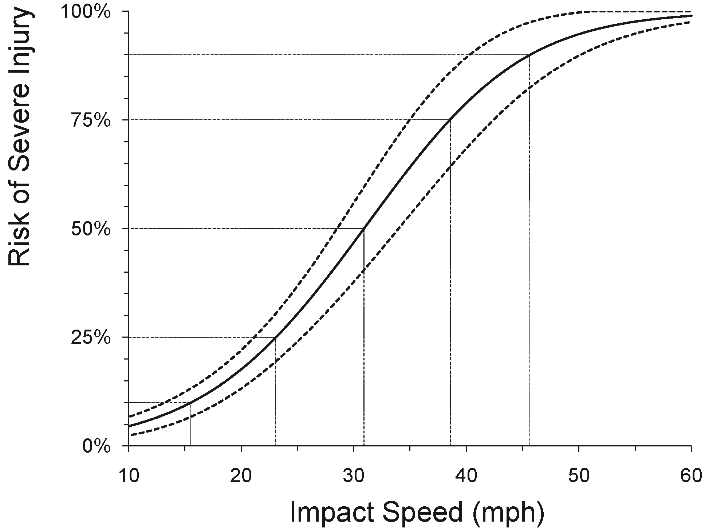
The risk of severe injury as a function of driver speed makes an “S” curve, with a dramatic change between 20 MPH and 40 MPH.Image from National Highway Traffic Safety Administration (NHTSA), adopted from a study by Brian Tefft, Accident Analysis and Prevention 50 (2013) 871– 878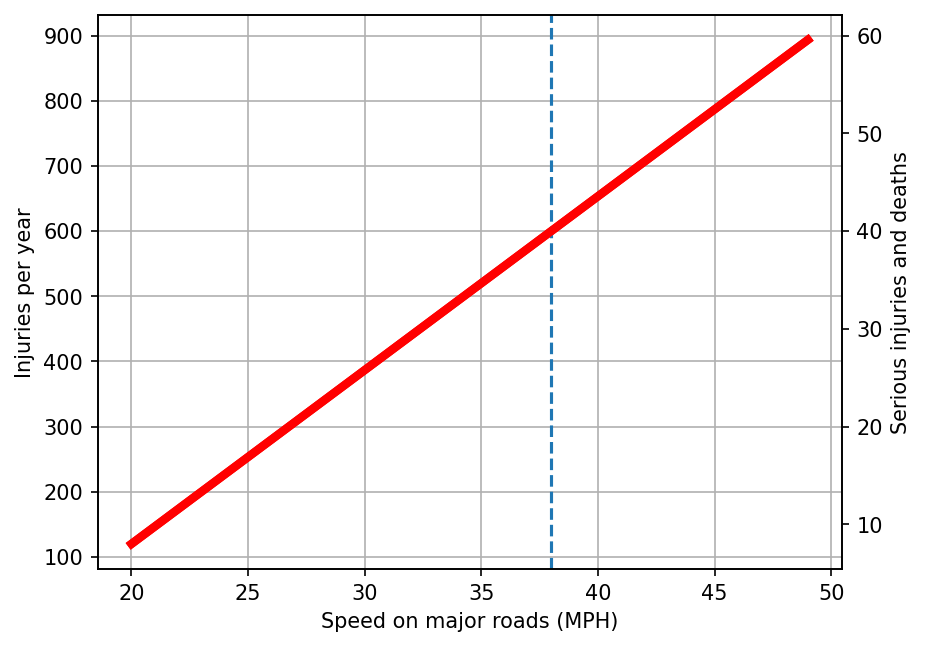
To understand the relationship between speed and injuries, I combined data from the study above with crash statistics from the Pasadena DOT.

Pasadena today has around 600 injuries per year, 80% of which occur on just 13% of streets. For a simple model, I'll set Pasadena today to be at the blue line, with speeds on major roads around 38 MPH. This is a typical speed on high-injury streets like Orange Grove or Fair Oaks. Making relatively small changes to the speeds on these streets would have a dramatic impact on the number of injuries in Pasadena.
.
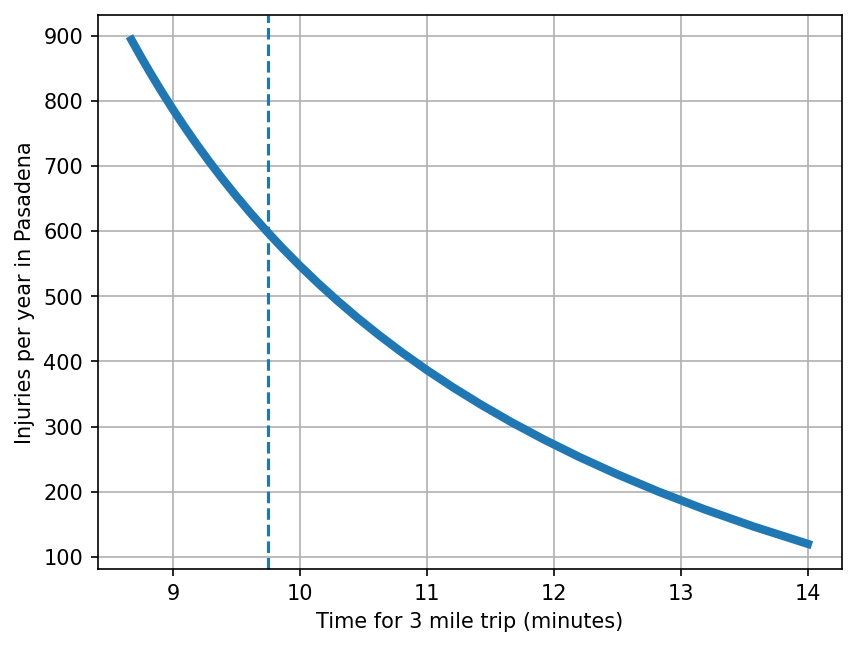
This plot shows the rate of injuries in Pasadena as a function of time for a 3 mile driving trip. Today, 3 mile trips in Pasadena take an estimated 9 minutes and 45 seconds, using speeds that cause 600 injuries each year. Reducing top speeds from 38 MPH to 30 MPH would add about a minute of travel time and would prevent 200 injuries each year and 2 deaths.For trip time models, I assumed travel time is at the “top speed” in the speed vs. injuries plot, plus 5 minutes of stoppage time for intersections, traffic signals, and parking.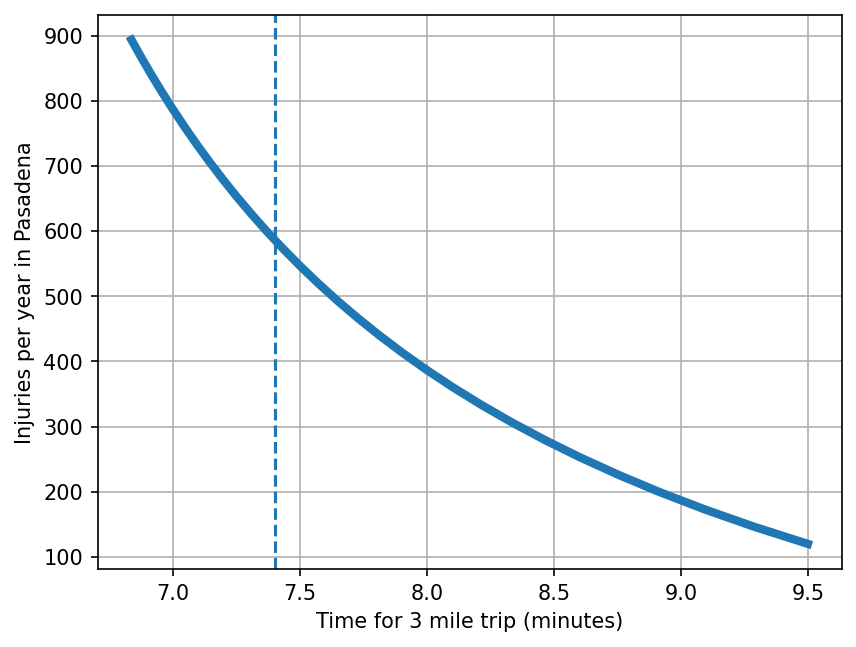
Here, I ried a 1.5 mile trip to estimate how long it takes to reach a freeway ramp. It takes around 7 minutes and 20 seconds to get to the freeway entrance at 38 MPH, or 8 minutes to get to the freeway at 30 MPH. Those extra 40 seconds could prevent 200 injuries each year.Model includes 5 minutes of stoppage time.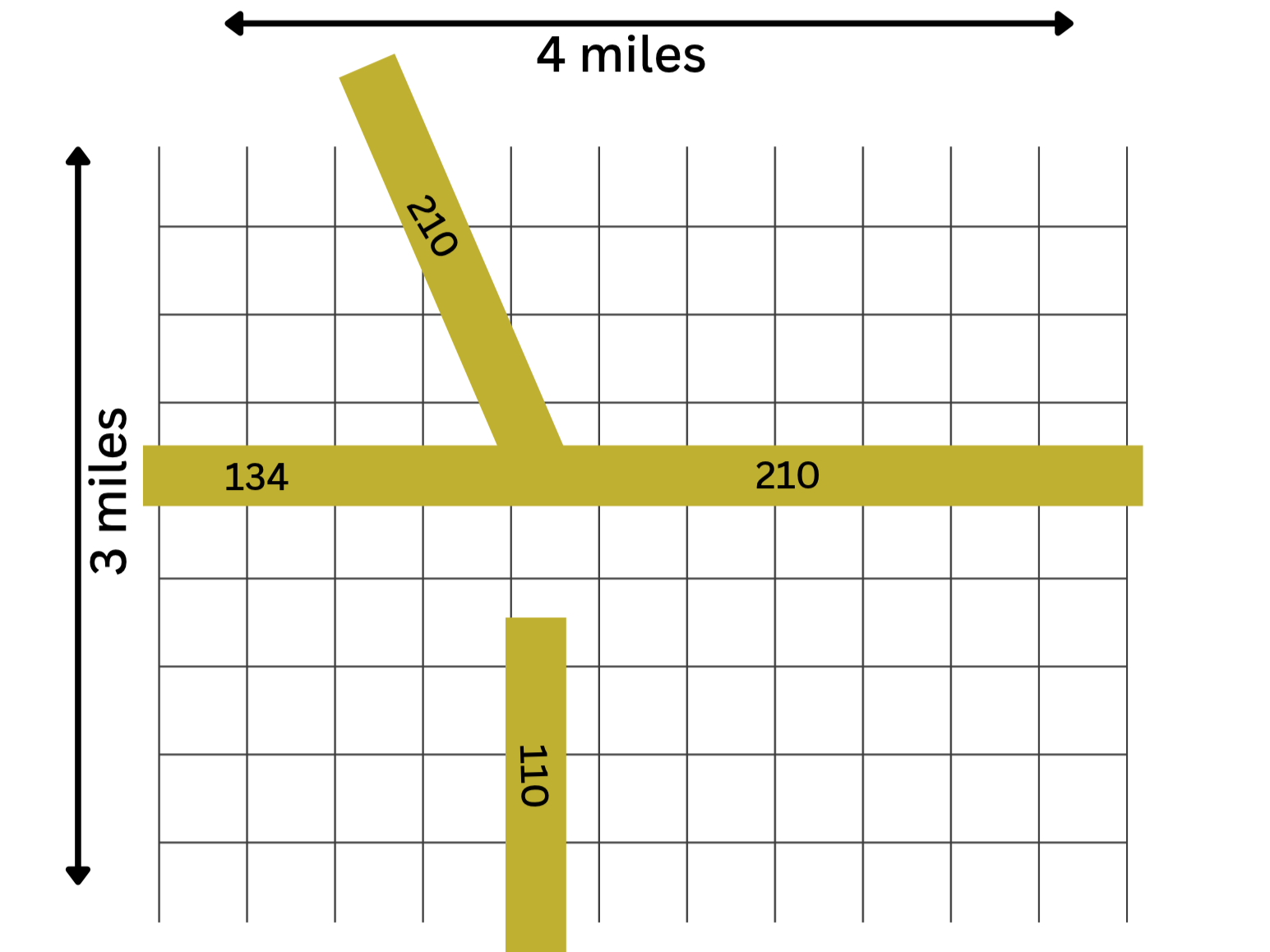
Simplified driving map of Pasadena. Pasadena is only a few miles across, with lots of access to freeways. Trips on surface streets are pretty short, so faster top speeds don’t reduce drive times much.October 2026