The Time Machine in New Orleans
There’s a time machine in New Orleans. You can walk on streets from the 19th century.
New Orleans is two different cities
Every city has a complicated past. Cities are shaped by people designing and building at different times and for different reasons, so that the result at any moment contains a collage of worldviews and a jumble of styles. In New Orleans, the contrast between different times and different styles is especially dramatic.
I recently spent a weekend in the Big Easy, and—oh wow—it is amazing! I learned that there is so much music and so many bars and so many restaurants. You could spend a lifetime listening and drinking and eating and never get bored; in fact, I think some of the locals are trying to do exactly that!
I also learned that New Orleans has a time machine! The time machine is called “Canal Street,” and it is hidden in plain sight. I spent an afternoon trying it out, flipping back and forth between centuries by riding a rented bike back and forth across the Canal Street Time Warp.
New Orleans of 1820 is built for people
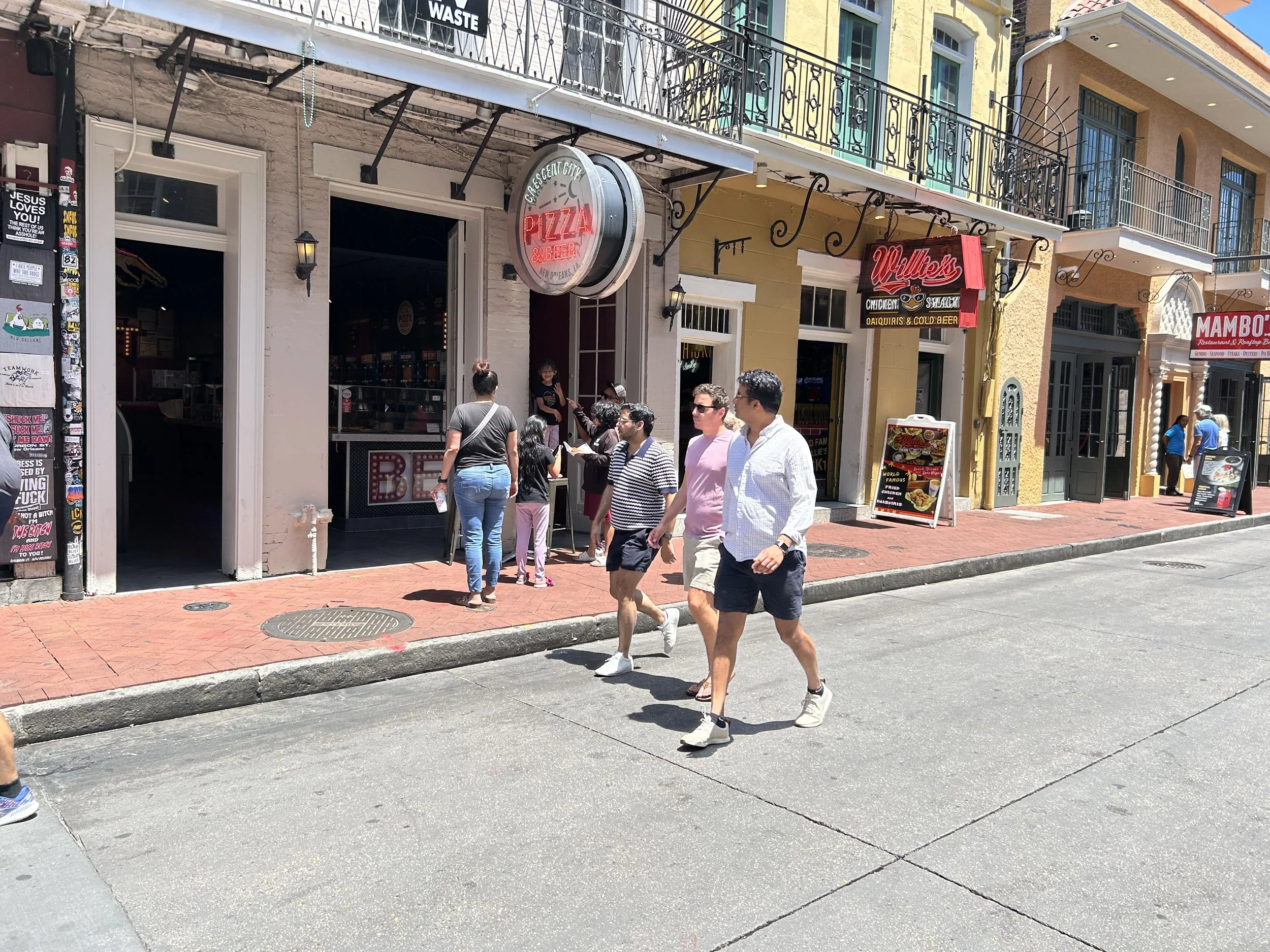
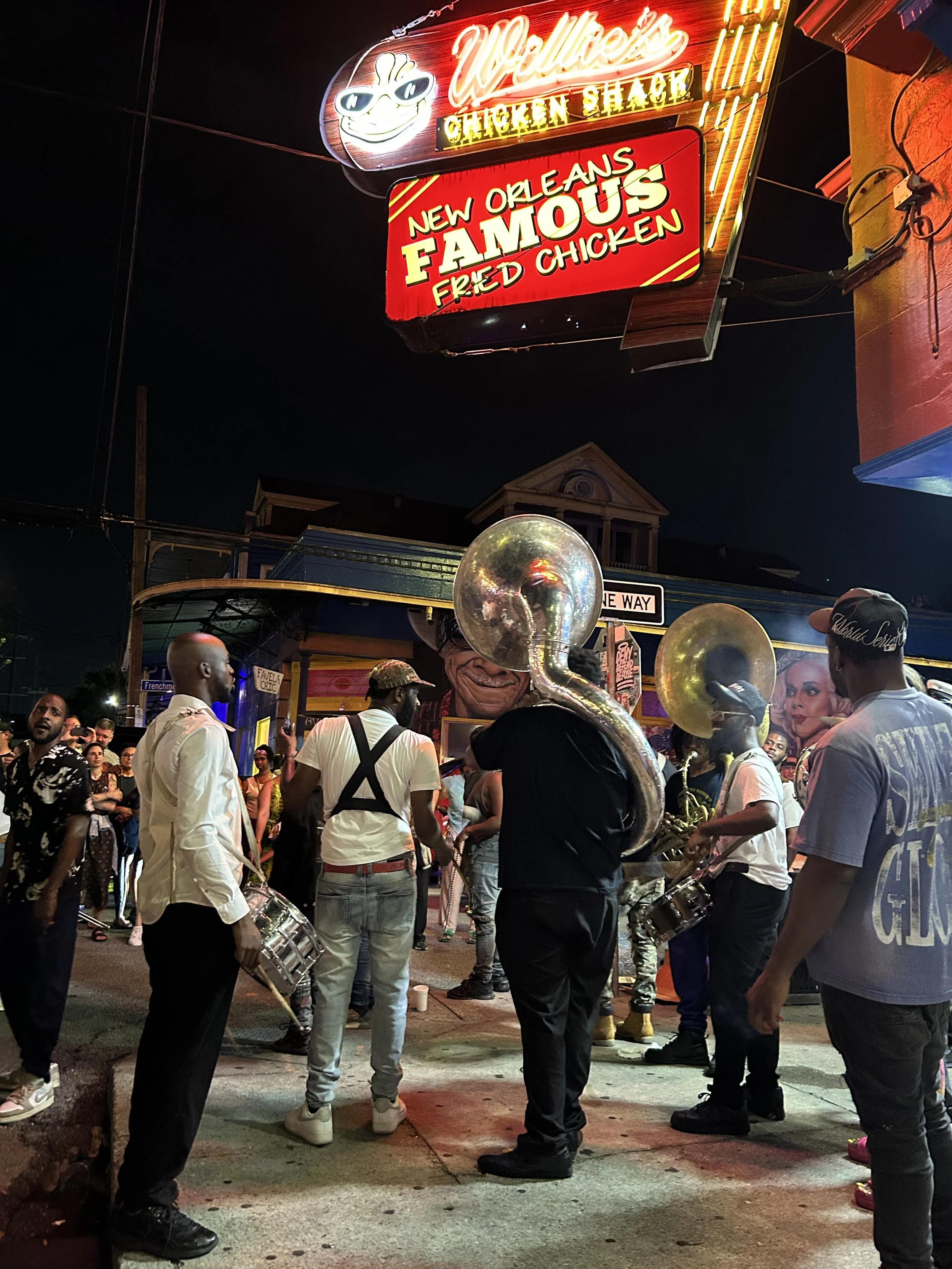
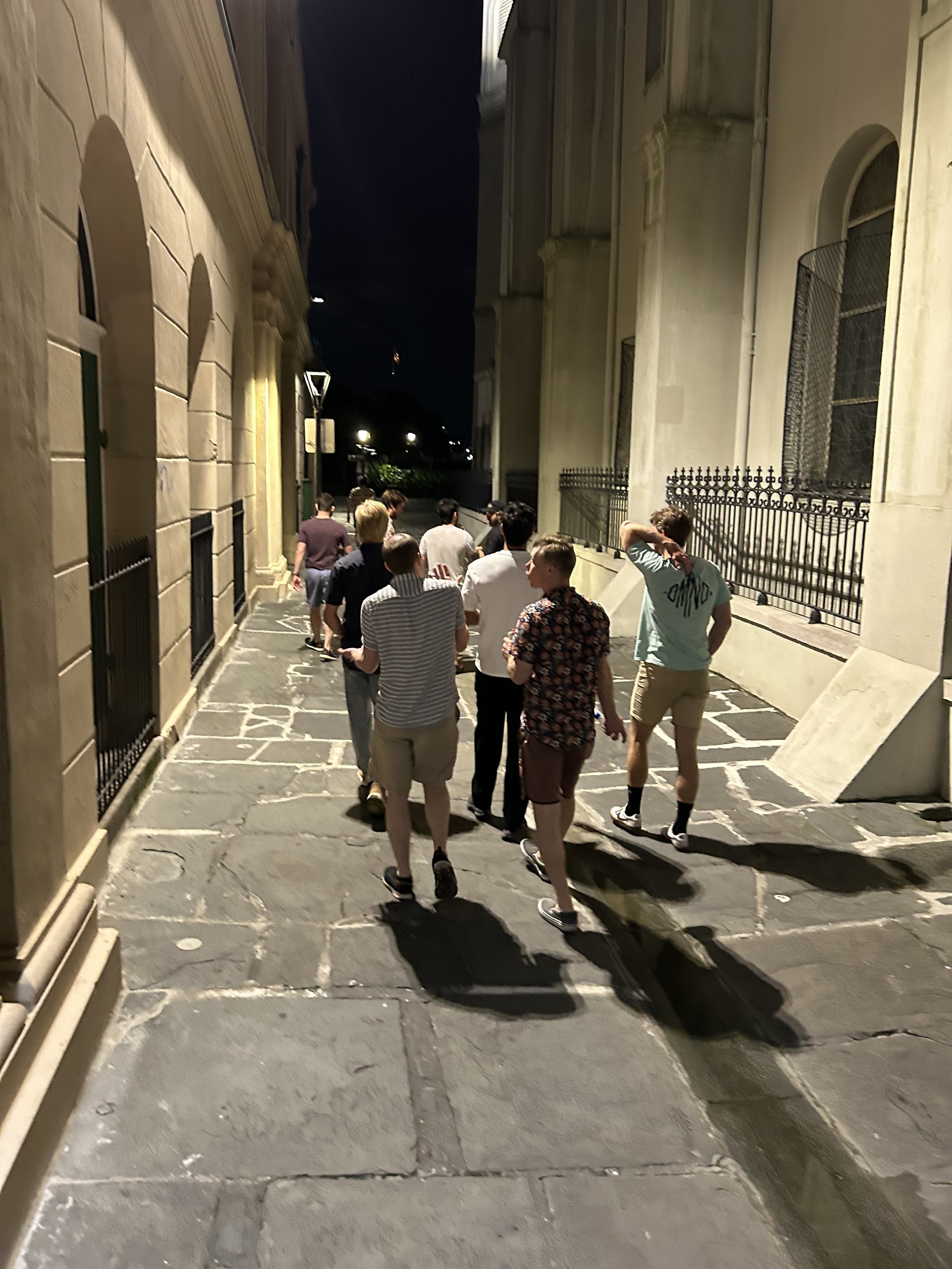
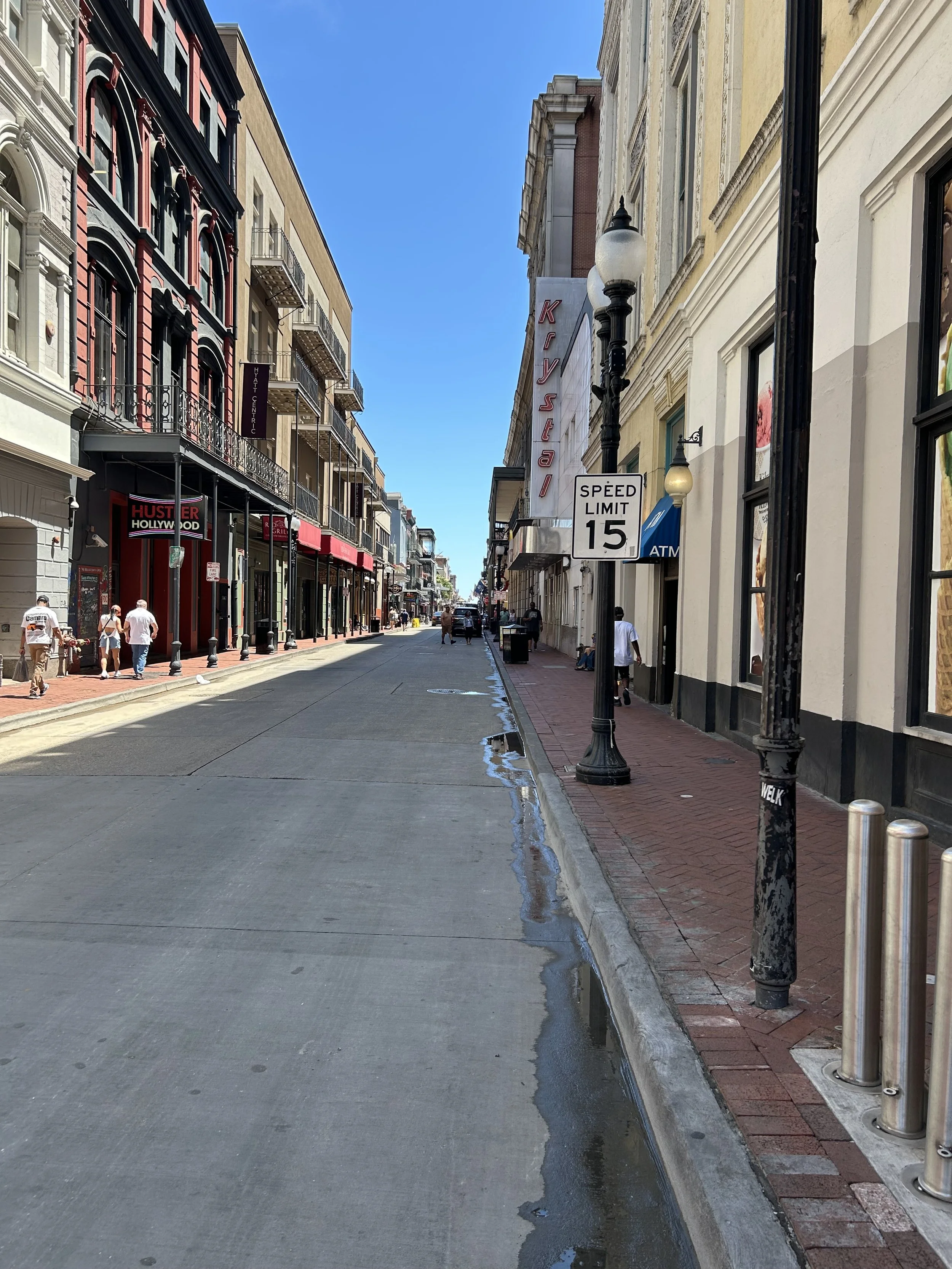
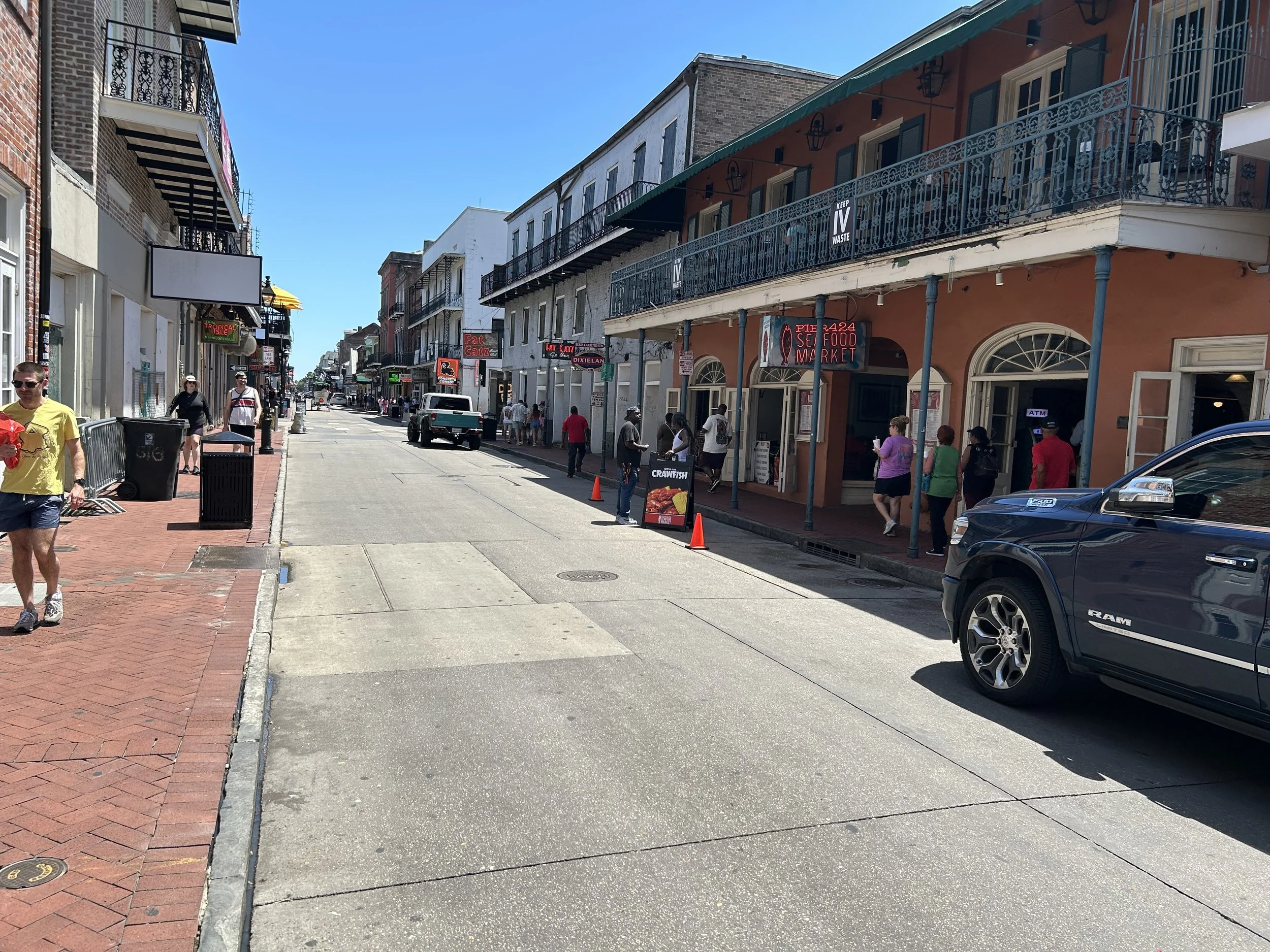
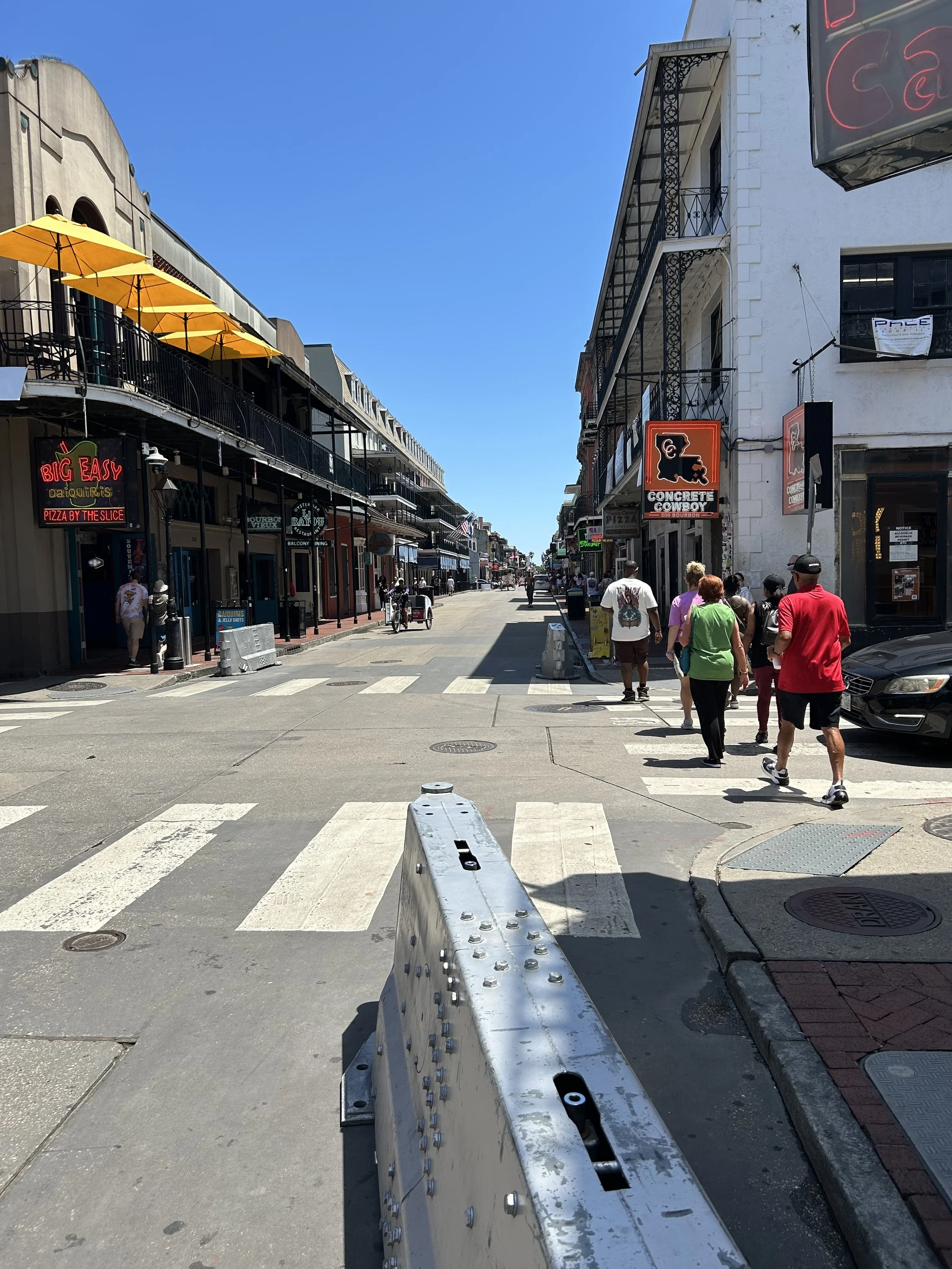
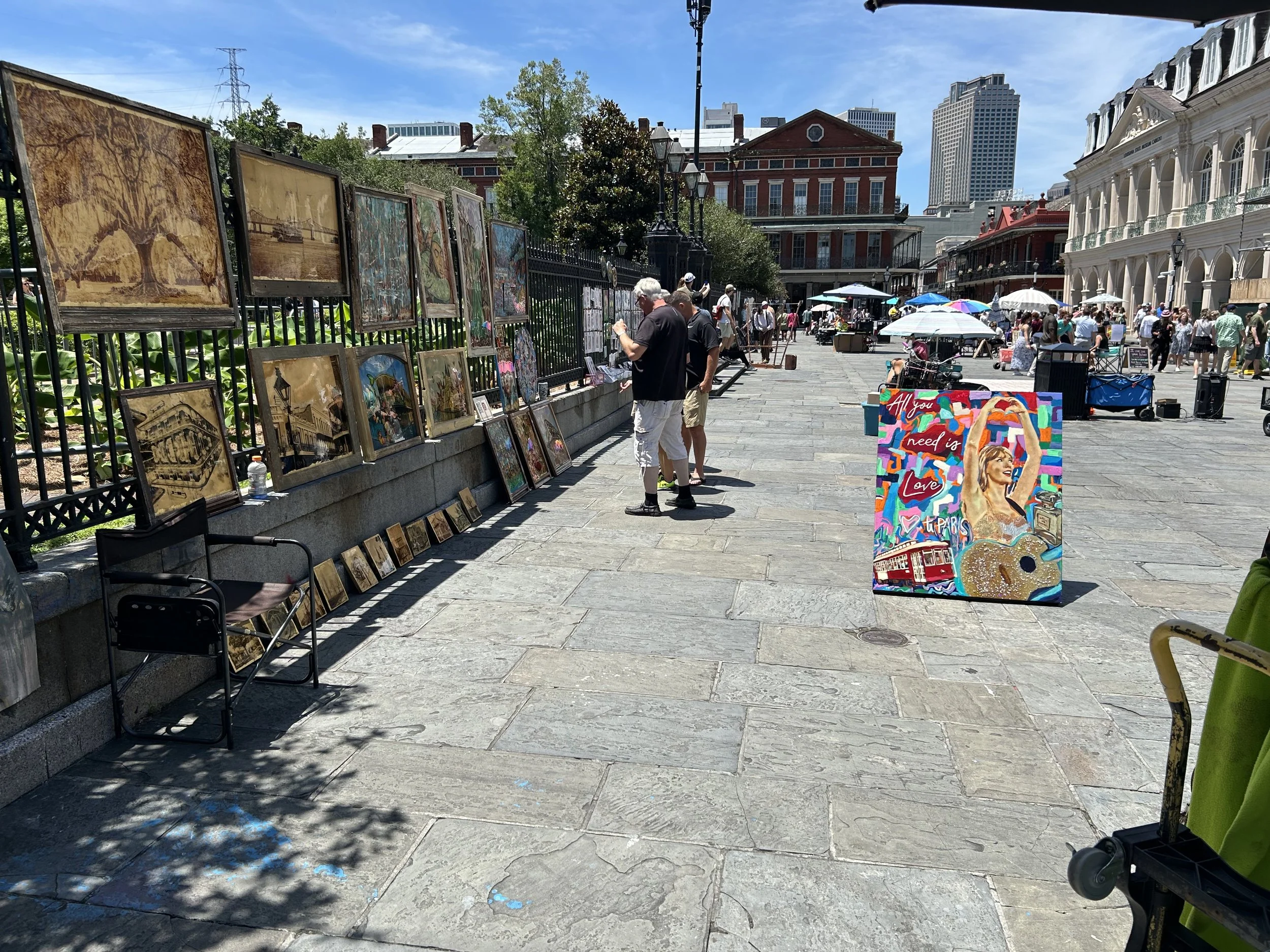
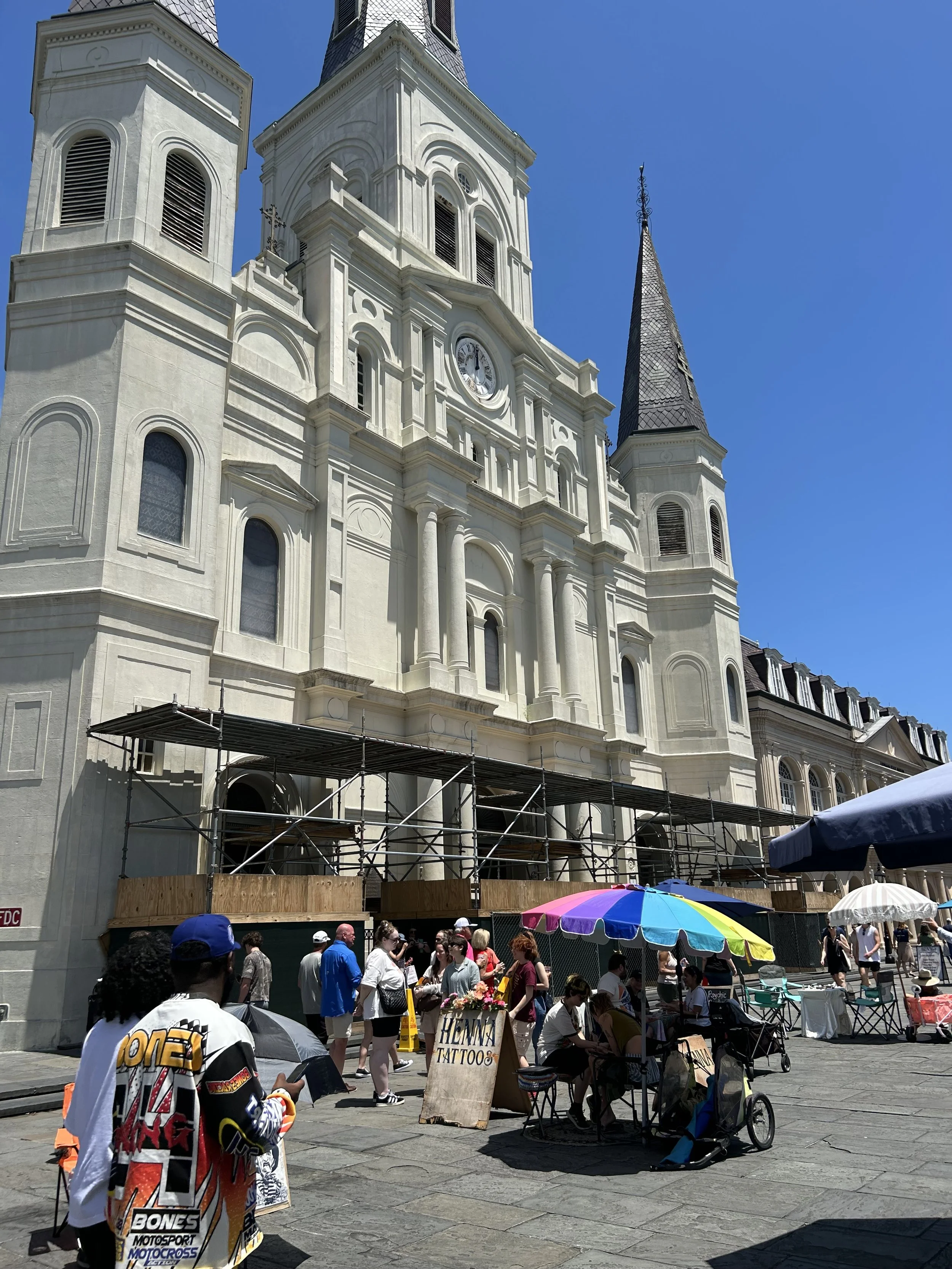
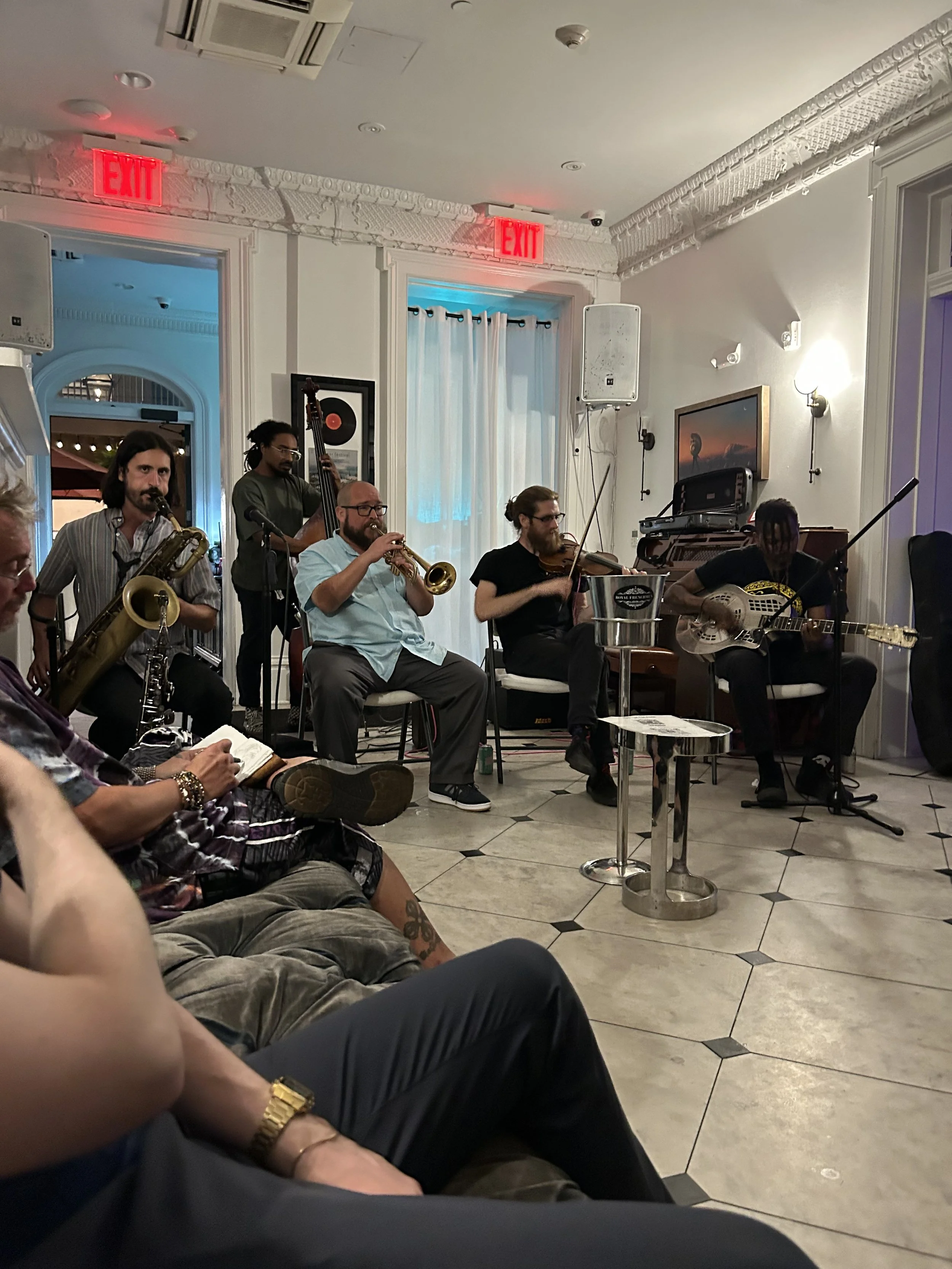
The east side of Canal Street is built more-or-less exactly the same as it was in the 19th century. The East-of-Canal-Street neighborhood is the famous New Orleans French Quarter, which includes some of the city’s best known tourist attractions, including Bourbon Street, Jackson Square, and Café Du Monde. By some magic spell (Voodoo, I assume) this neighborhood’s architecture is perfectly preserved, so that visitors can travel to a different time. The streets are narrow and often crowded with people walking and horse-drawn carriages, so that cars move slowly and rarely exceed the 15 MPH speed limit. Most of the streets are one way and have space just for one line of parked cars and one lane of slowly moving traffic. The neighborhood is flat and only about a mile across, so most people are walking or biking to get around. Needless to say, the street life both day and night is powerfully vibrant, with full restaurants, lots of shopping, excellent coffee shops, street bands, and outdoor artists. In this voodoo time warp, horse-drawn carriages, bikers, drivers, and people walking all more-or-less have the same rights to use the street space, and manage to share it without too much friction. The result is a place where walking around is strongly inviting. Space inside and space outside flow together into one big scene. In the French Quarter, you don’t visit a bar, you visit the whole neighborhood.
New Orleans of 1980 is built for cars
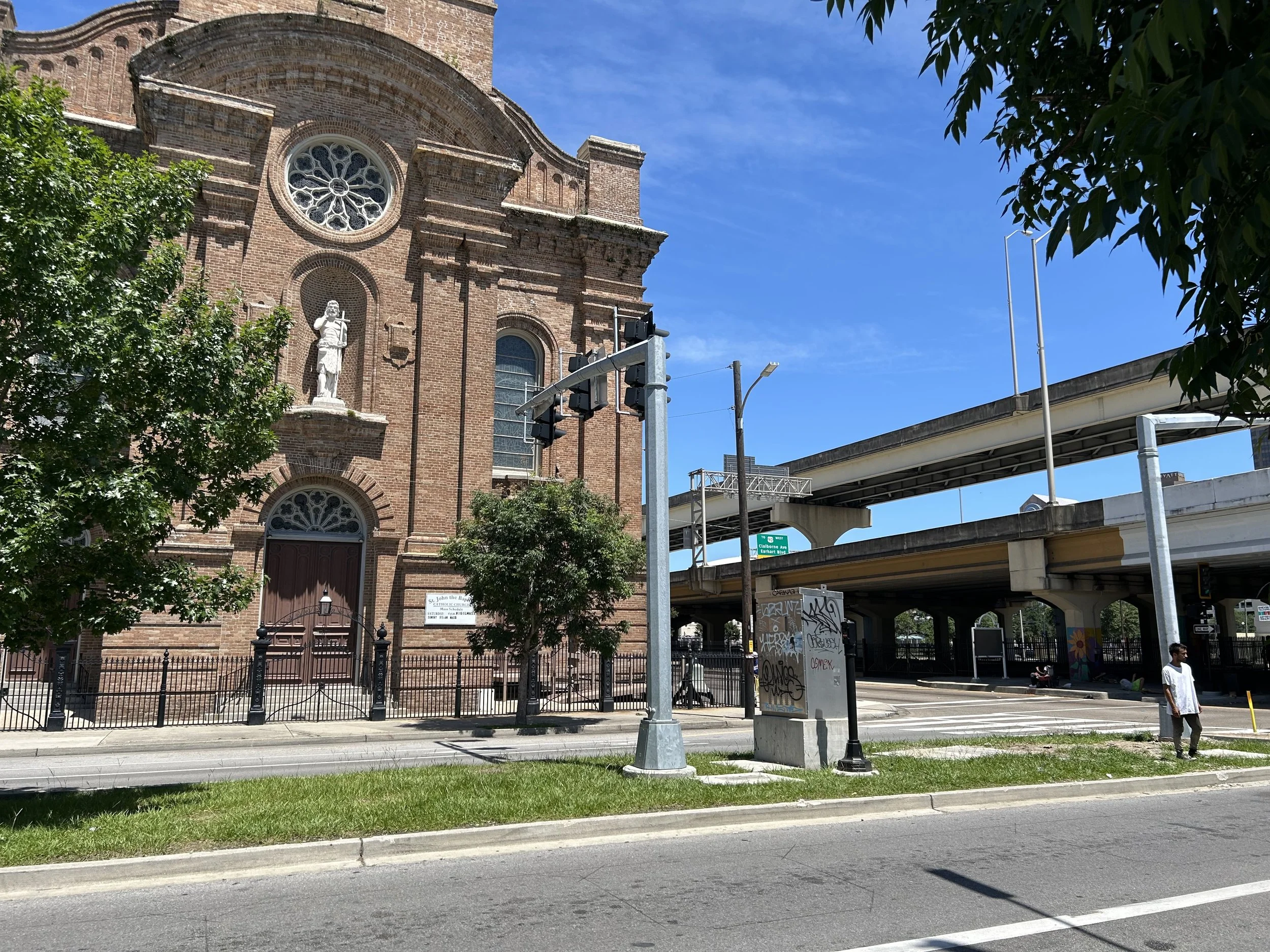
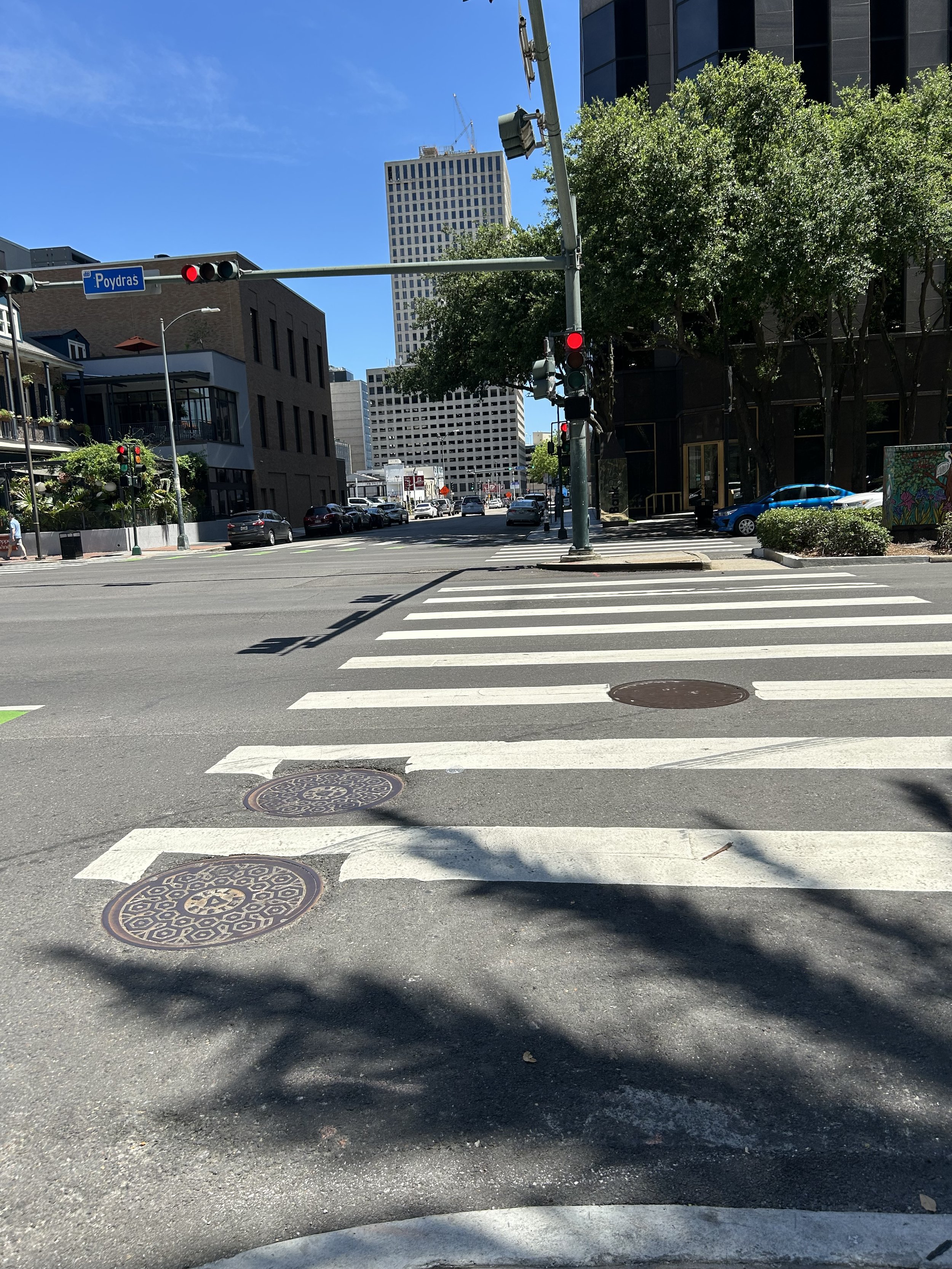
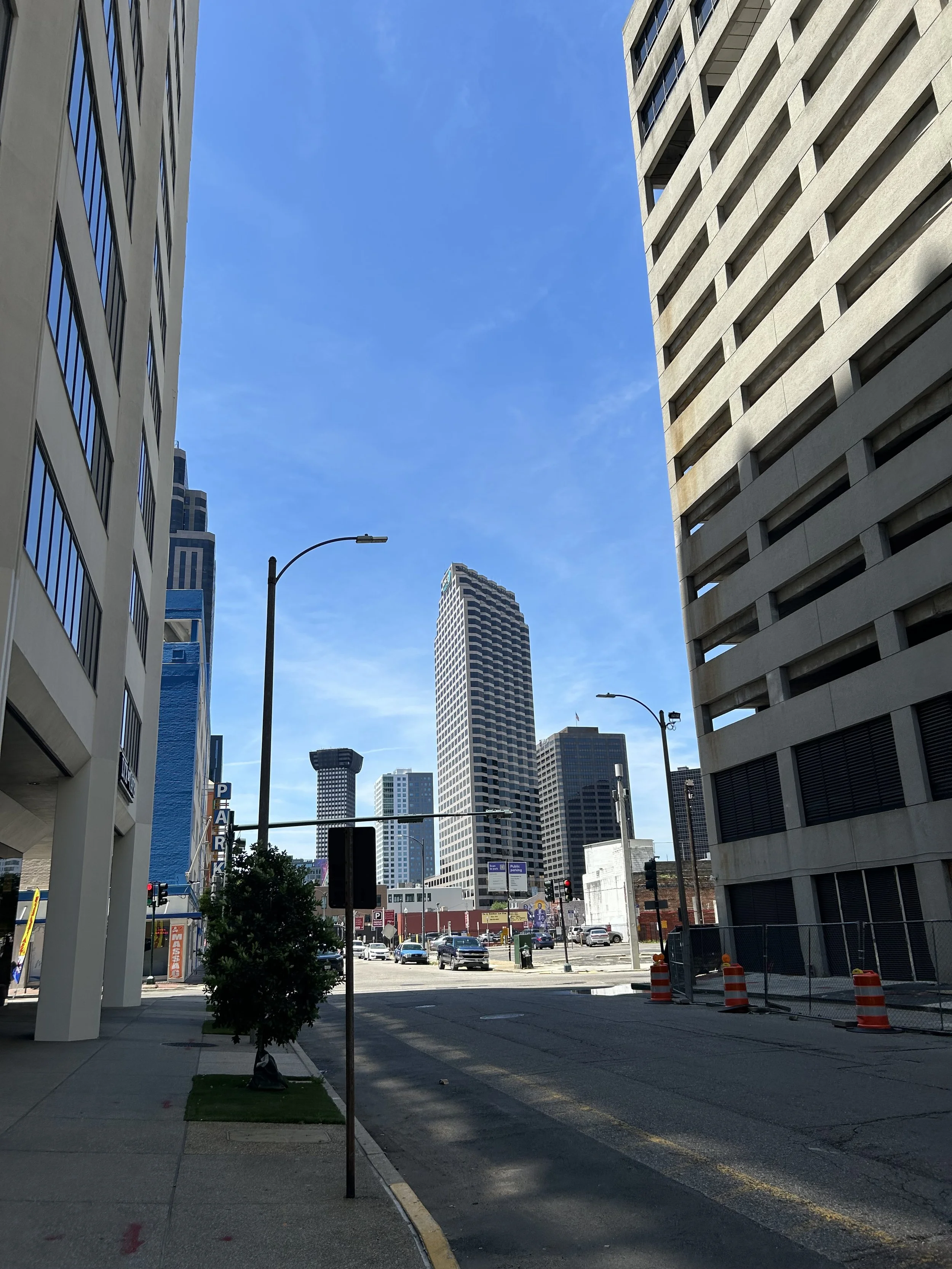
Now take a trip in the time machine. The west side of Canal Street is a different city built in a different time. Gone are the three-story structures of the 1800’s. Instead, West-of-Canal features towering office buildings of the 20th century. The streets are wide, with multiple lanes for fast moving car traffic, and the area includes lots of space for parking. In short, the west side of Canal Street looks just like a lot of other American cities: gray, inhospitable, and barren. Street life basically disappears; it’s reduced to occasional chain restaurants supported by thin streams of people on short breaks between their office and their cars. Crossing from the French Quarter into the west side of Canal is like walking out of a shaded forest directly into a scorching desert.
I was especially struck by comparing two beautiful churches, one on each side of the time warp. Both are beautiful historic buildings. The one in the French Quarter faces Jackson Square, and the area around it has street artists, jazz bands, shaded walkways, and a city park. The area around the church is crowded with visitors on a weekend morning. Across time, on the modern side of Canal Street, a freeway has been ripped through a neighborhood containing another historic church, as have some four-lane roads. This church seems out-of-place and lonely, almost as if someone accidentally dropped it off at the wrong address or maybe transported it from another planet.
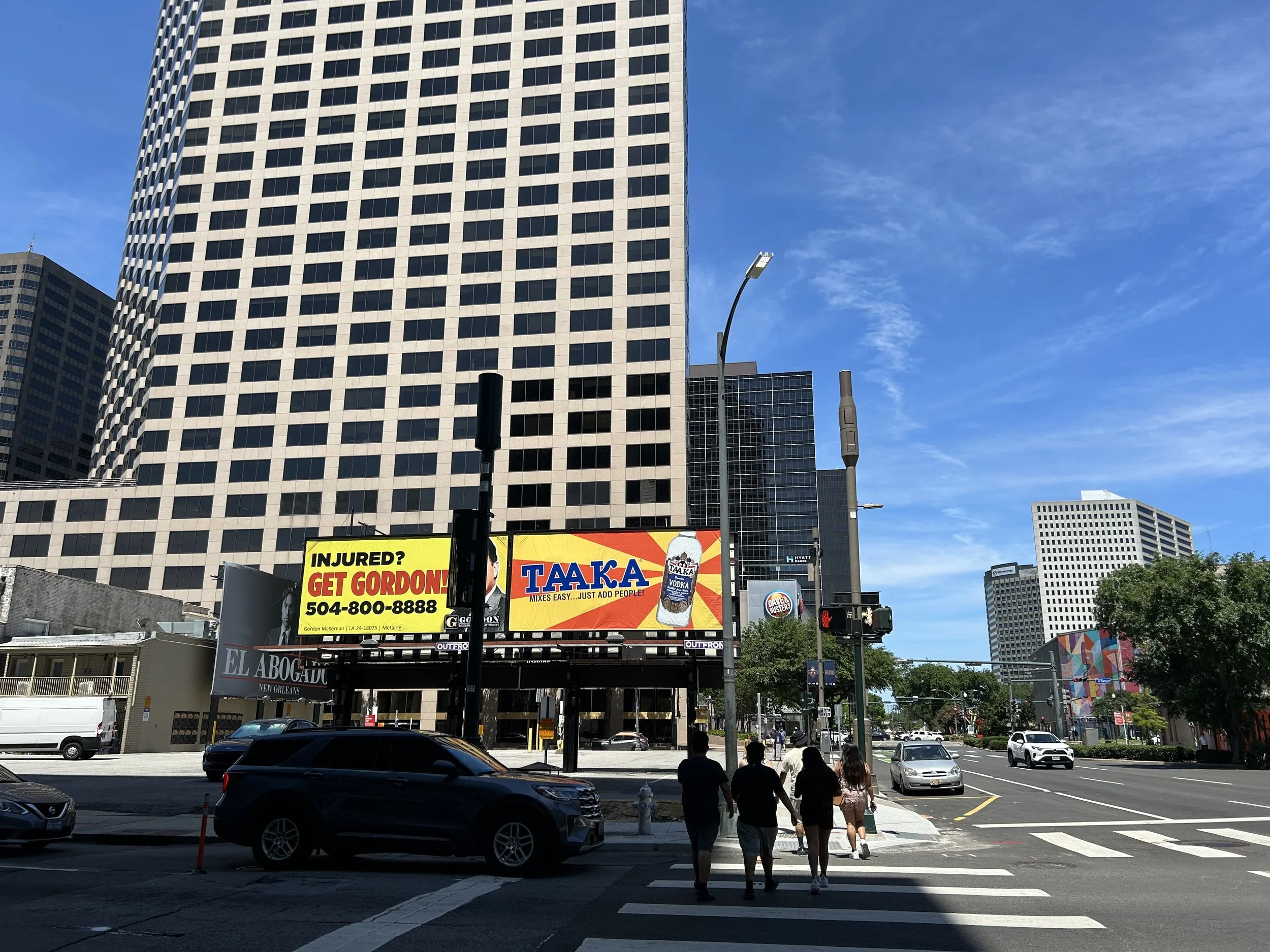
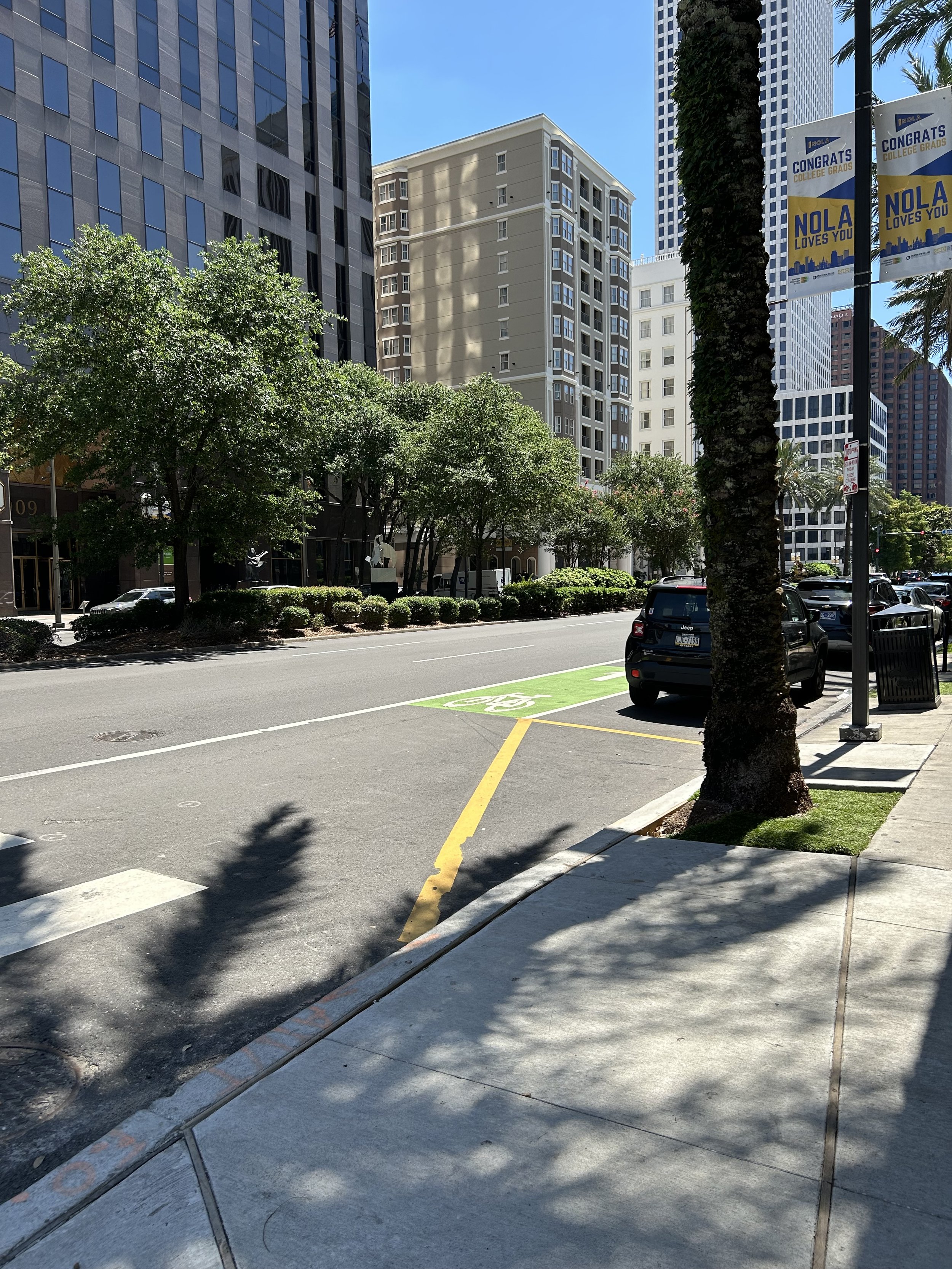
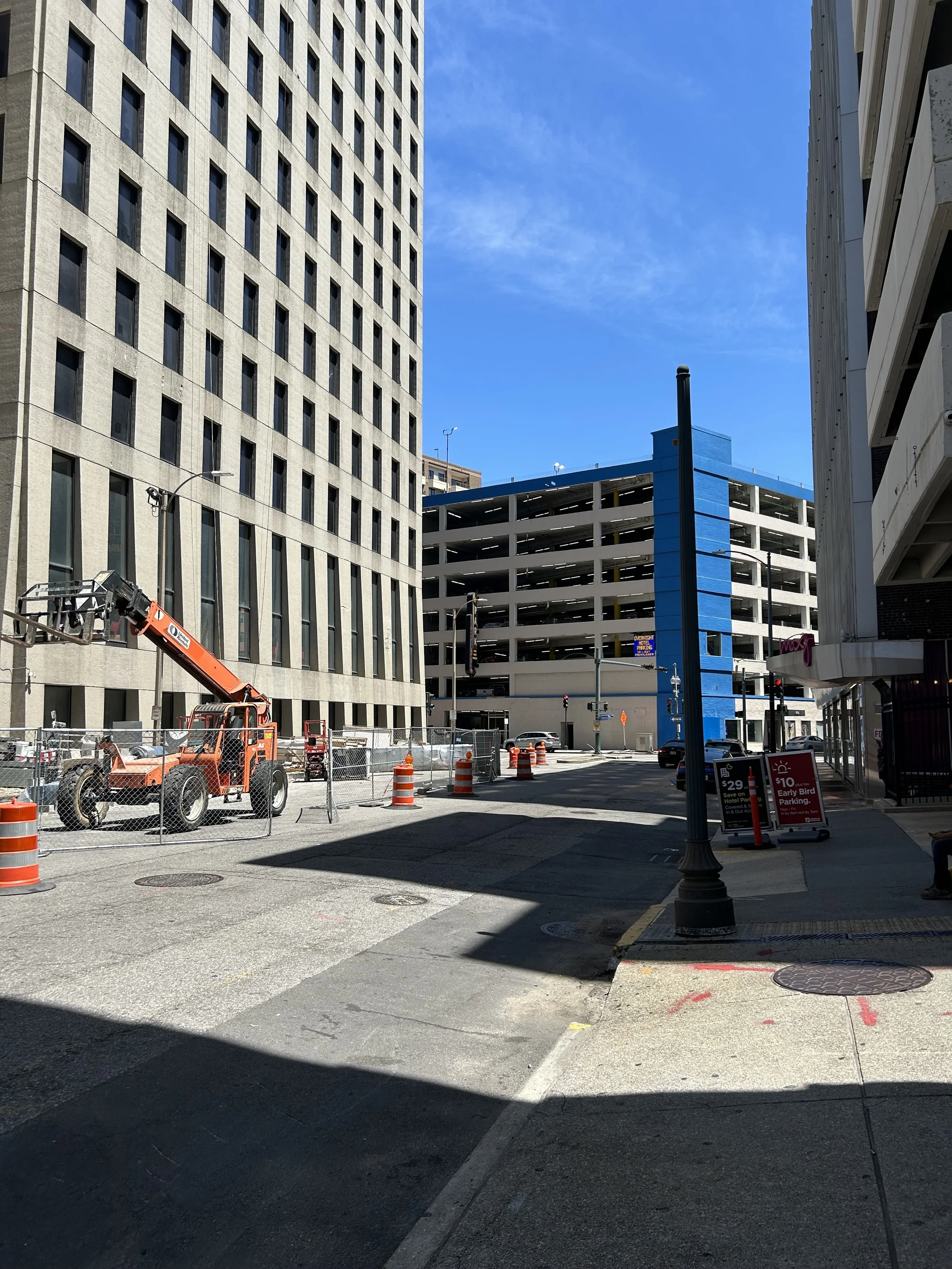
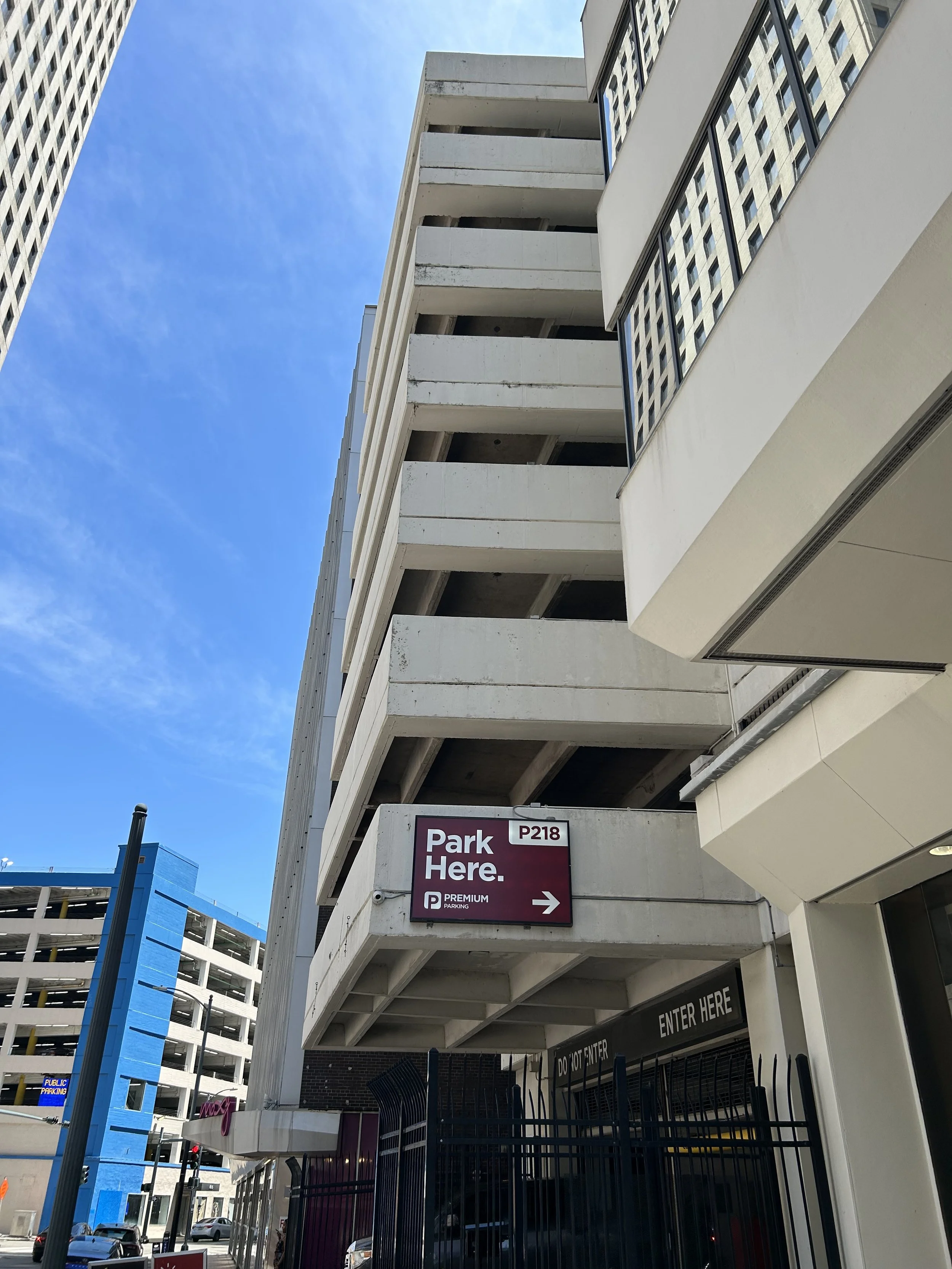
A monument to racism
Part of the story about how some of New Orleans was preserved, while other parts were destroyed for car travel, is told in episode 164 of the War on Cars podcast. The narrative describes the destruction of some mostly Black neighborhoods for the I-10 freeway in the 1960’s, and refers to the freeway as a “monument to racism.” While the story of New Orleans’ history is very complex, no doubt the two different cities I noticed are partially a result of past planners dividing the city into places to preserve (for white people) and neighborhoods to bulldoze.
Which is the real New Orleans?
All of this left me wondering which side of Canal Street is most essential. Could New Orleans support a modern economy without extra-wide streets for fast moving cars? Would civic life grind to a halt if more of the roads were designed for safe walking and biking? I honestly don’t know. But I am certain that going the other way, by bulldozing the French Quarter for more parking, would destroy both the soul and the tourist economy of the city. I’m certain that without the French Quarter, there would be no New Orleans; I’m not sure if you can say the same thing for the modern-day office towers and four-lane roads.
As we think about building cities in the 21st century, I think New Orleans gives a lot to consider about how to build the future. I hope someday you’ll get a chance to visit the Time Machine on Canal Street and consider what are the lessons from these two juxtaposing cities.
October, 2026